Luxury Sellers
What should I prepare before selling my Indian Wells home?
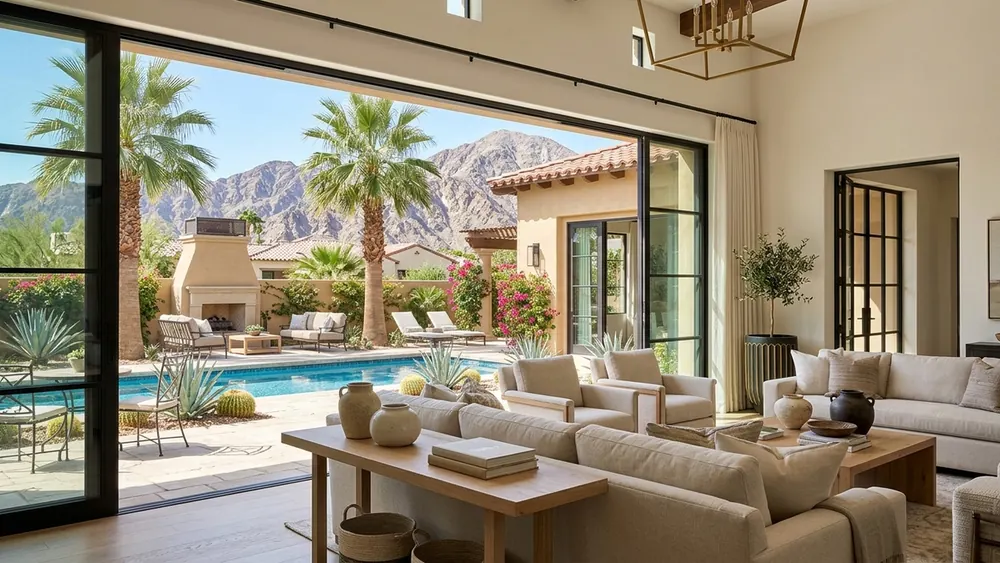
Before selling an Indian Wells luxury home, handle known repairs, present each room with care, gather your records and plan around the desert season, then decide early how discreet you want the whole process to be.
On this page
Start with condition, presentation and records
Before you sell a luxury home in Indian Wells, prepare it for close inspection. That means handling the repairs you already know about, presenting each room with care and gathering the records a buyer will ask to see. Add two planning decisions on top: when in the desert season to bring the home to market, and how private you want the process to be. Settle those early and the rest of the sale has a clear shape.
This matters because buyers at this level tend to look closely. They notice how a door closes, how the pool equipment sounds and whether the landscaping has been kept up. A small issue left alone can raise a larger question in a buyer’s mind about everything they cannot see. Preparation is not about making the home look new. It is about letting a careful buyer feel that the home has been looked after.
It also matters because preparation is the part of a sale you control. Market conditions, buyer timing and competing homes sit outside your hands. The condition of your home, the clarity of your paperwork and the way showings are handled sit firmly inside them. Bob Ross and Sue Ellen Ross start every seller conversation there, with the pieces you can actually shape, and they leave forecasts out of it. Starting with what you control also makes the later decisions calmer, because they rest on facts you have already gathered.
Repairs worth handling before buyers arrive
Start with a walk through as if you were the buyer. Most owners carry a short mental list of things they have learned to live with, and those are often the first items a visitor notices. A licensed home inspector can give you an independent view before you list, so a buyer’s own inspection is less likely to surprise you. These are the areas sellers commonly review first. Fix what is straightforward, and for anything larger, get a written estimate so you can decide whether to repair it or simply disclose it.
- Roofing, gutters and any signs of past water intrusion around windows or doors
- Pool and spa equipment, heaters, pumps and the condition of the surrounding decking
- Air conditioning systems, filters and the service records from recent maintenance visits
- Irrigation, drainage and desert landscaping that has drifted from its original design
Records a careful buyer will ask to see
Records carry real weight in a luxury sale. When a buyer can see what was done to a home, by whom and roughly when, the conversation shifts from guessing to reviewing. Gather what you have now, while there is still time to request missing copies from contractors or the homeowners association. Keep everything in one organized place so it can be shared when the moment is right. Even an incomplete file is useful, because it shows a buyer that the home has been managed with some care over time.
- Permits and final sign offs for remodels, additions, pools or major system replacements
- Service invoices for air conditioning, pool equipment, roofing and irrigation work
- Warranties that may transfer to a new owner, along with the name of each provider
- Homeowners association documents, recent notices and any correspondence about the property
- Any club paperwork you hold, so membership questions can go straight to the club
Presenting a desert home with restraint
Presentation for a luxury desert home is usually about editing rather than adding. Clear surfaces, fewer personal photographs and open sightlines to the fairway, the courts or the mountains let a buyer picture their own life in the space. The goal is a home that feels calm and well kept, not one staged so heavily that it starts to feel like a showroom. Ask a friend who has never seen the home to walk through it with you, and note what draws their eye first.
Outdoor spaces deserve the same attention as the rooms inside. Desert buyers often spend as much time on the patio as in the living room, so furniture, shade, lighting and the pool area all shape the first impression. Trim the landscaping, check that every outdoor light works, and make sure the view from the main seating area is the one you want a buyer to remember. In the desert, the outdoor rooms are often where a buyer decides how the home feels.
Photography and video come next, and they should follow the preparation rather than lead it. Once repairs are done and rooms are edited, the images can show the home as it actually lives. Bob and Sue Ellen Ross talk through which rooms and views matter most, and how much of the interior you are comfortable showing publicly, before anything is scheduled. That order keeps you from paying for images that need to be redone once a room has changed.
Timing a sale around the desert season
Indian Wells has a seasonal rhythm, and many buyers visit the desert when that season is in full swing. Planning your preparation so the home is ready while buyers are in town gives you more options. That is planning, not a prediction: the right moment for your sale still depends on your own plans, the home’s readiness and conditions that no one can promise in advance. Good preparation simply keeps that option open rather than closing it by accident.
Work backward from when you would like the home to be ready. Repairs, contractor schedules, photography and gathering records all take time, and desert contractors have their own seasonal workloads. If you live in the home for only part of the year, decide who will be on site for each step. A plan written down early prevents a rushed finish just as buyers start to arrive. Build in some slack for parts that arrive late or contractors who are booked ahead.
Prepare the home before you think about price. When condition, records and presentation are handled, every later conversation with a buyer gets easier for you.
Deciding how private the process should be
Some owners are comfortable with a broad, public launch. Others prefer that neighbors, club acquaintances and the wider community hear about the sale later, or not at all. Neither choice is right or wrong, but it should be made before photos are taken and showings are scheduled, because it shapes nearly every step that follows. Decide your comfort level first, then build the plan around it. A sale that starts quietly can always become more public later, but the reverse is much harder.
Discretion also covers how your home is shown. You can ask that showings happen by appointment only, that personal items and documents are put away, and that every visitor is accompanied. If the home sits behind a gate, think through how guest access will work for each visit. Bob and Sue Ellen Ross plan these details with you in advance, so your privacy is designed in rather than patched on later.
What to gather before a first conversation
Before you sit down to talk about selling, write down why you are selling and roughly when you would like to be finished. Note whether the home is a primary residence or a seasonal one, and where you expect to be during the process. List the repairs you know about, the improvements you have made and any open questions you have about the homeowners association or the club. These notes do not need to be polished. They simply give the first conversation a useful starting point.
Bring whatever records you have already found, even if the pile is incomplete. Questions about taxes on a sale belong with a tax professional, and anything about contracts or title with a real estate attorney. Membership questions belong with the club, and association questions with the association. Sorting questions by who answers them keeps the sale moving and keeps guesswork out of your decisions. A short list of open questions, each with a name beside it, is often the most useful document a seller brings.
If you are thinking about selling a luxury home in Indian Wells or nearby in the Coachella Valley, bring your questions to Bob and Sue Ellen Ross of Grand Luxury Properties. They will walk through condition, records, timing and privacy with you, at whatever pace suits you. There is no need to have every answer before that first conversation. Which part of preparing your home feels least settled right now?
This article is general information about buying and selling homes in Indian Wells and nearby desert cities. It is not legal, tax, lending, insurance or inspection advice and does not predict prices or promise results. Confirm club membership terms with each club, association fees and rules with the association, services and taxes by address with official sources, financing with a lender, and property condition with a licensed home inspector. Bob Ross, Grand Luxury Properties.

Written by